

Message of peace & love, Sundance Award-Winning Director’s CRACK OF LIGHT, Radical Experiment in AI Minimalist Cinema
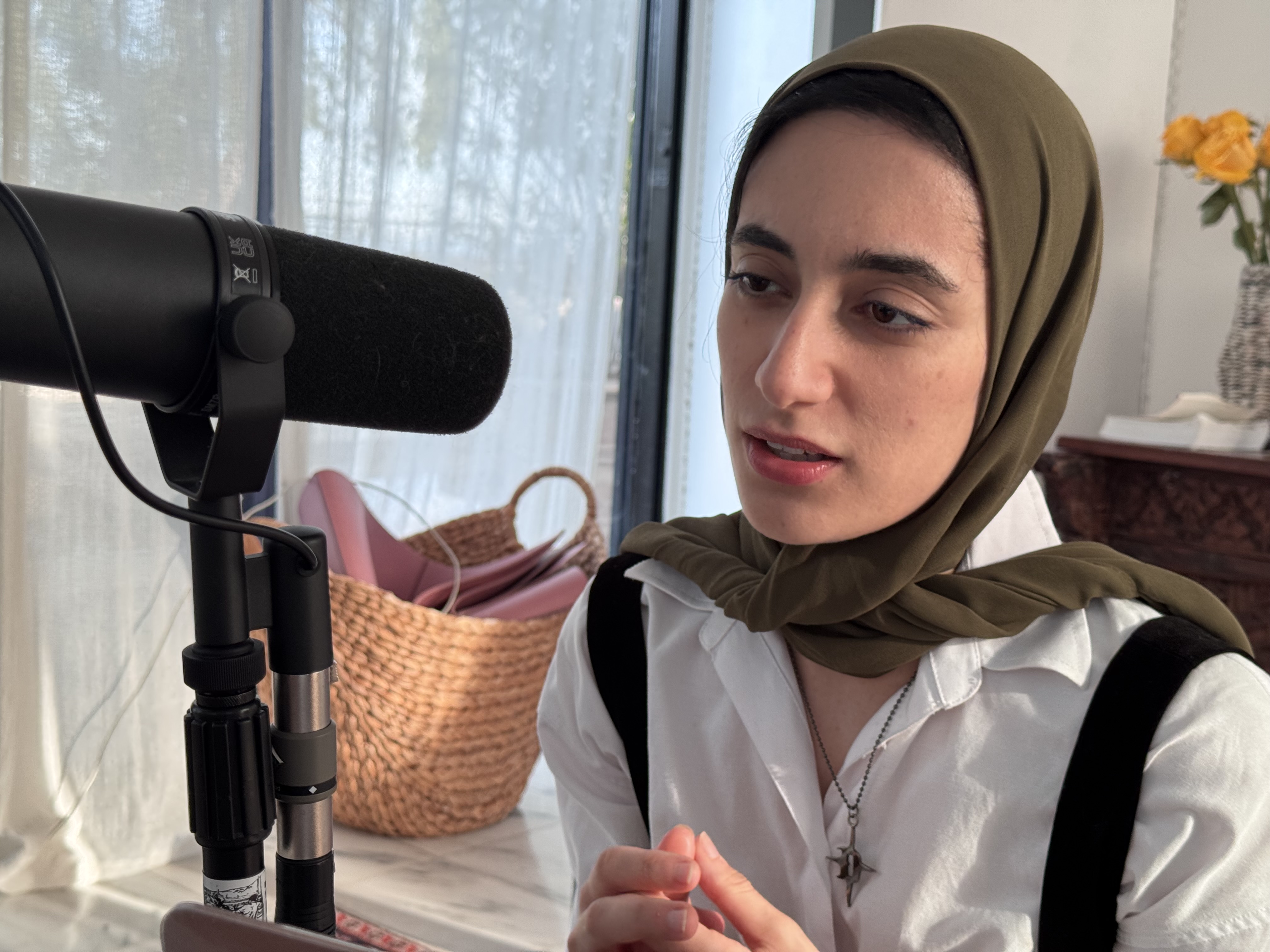
Sher Arar, performing 10 roles
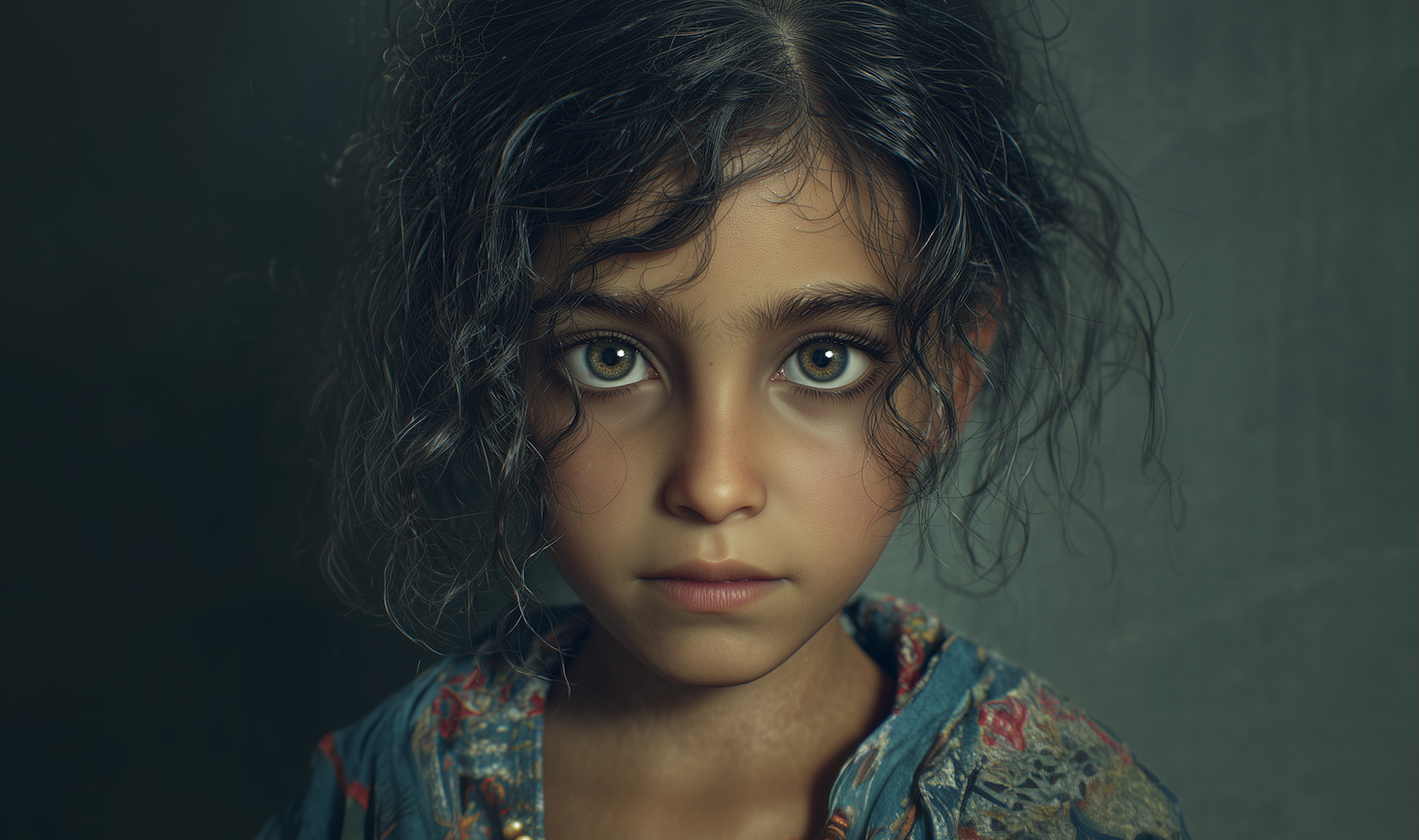
AI Generated Child
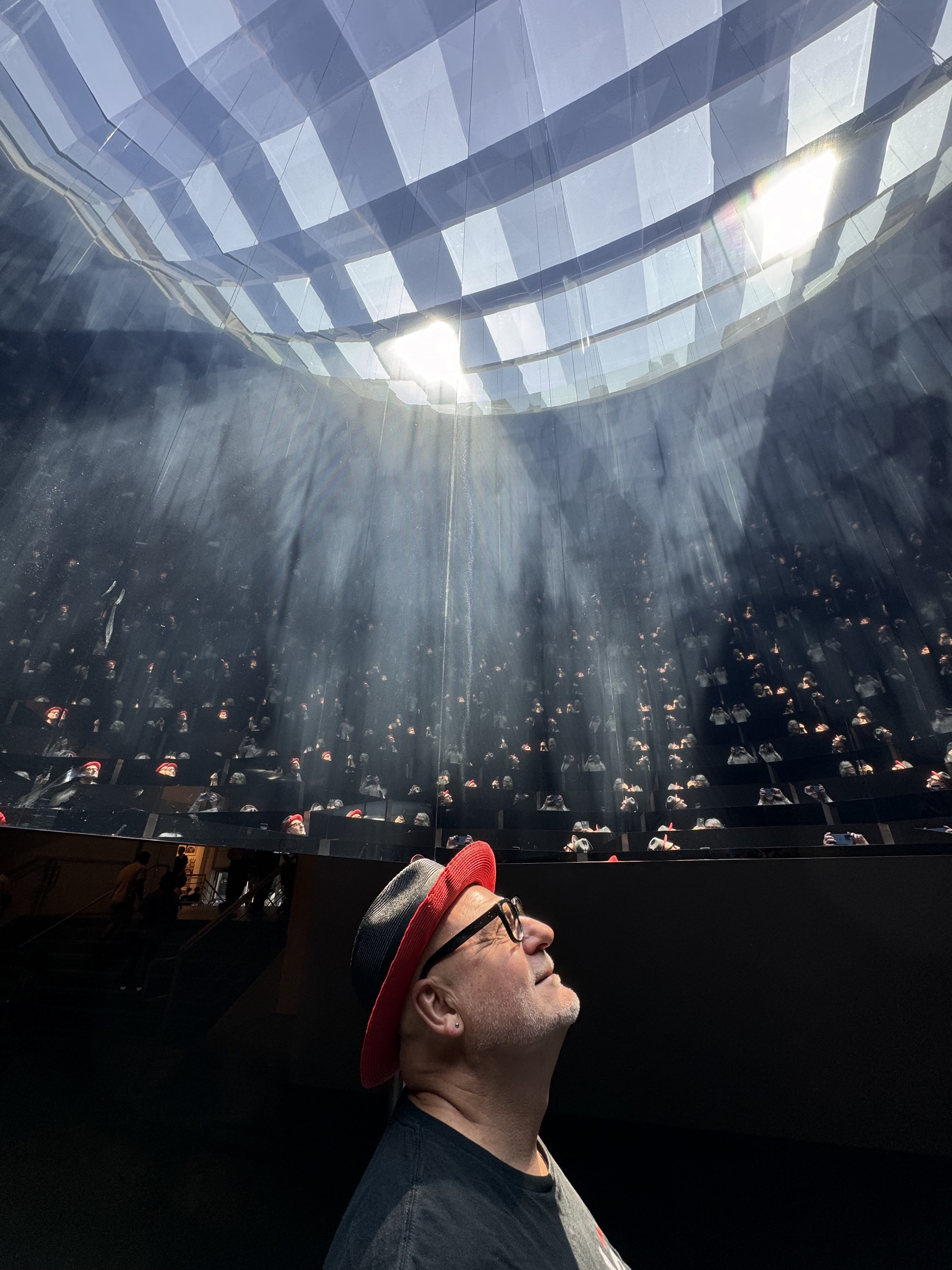
Rafal Zielinski
The film was created as a humanist tribute to all children lost to war, all around the world, past, present, and (hopefully not) future - Gaza as an example.
The 12 minute film drops as the Montreal based company is now evaluating a traditional awards path for the short, or to use this moment to help finance a larger body of work, or to expand the 12 minute short into a 90 minute feature length film.
Urgency as Method
The film was made with extreme urgency and restraint, created entirely by Zielinski himself in one week, without a crew, studio, or infrastructure. “I didn’t sleep for three nights,” he says. “If I had slept, it might have taken two weeks—but even that speed is unprecedented.”
The implications are radical: if a 12-minute section of a feature can be completed in one to two weeks, a full feature could realistically be produced in one to two months. With a miniscule budget, Zielinski estimates the eventual feature version could be made for as little as $25,000—a figure that fundamentally challenges conventional assumptions about filmmaking access and scale.
“Coming from a background in art and design at MIT, I have always been deeply interested in technology, and I see AI not as a replacement for human creativity, but as another powerful tool in the cinematic toolbox—one I have been rigorously exploring and experimenting with over the past three years.”
AI as Necessity, Not Provocation
The project also functions as a real-world test of how far AI-generated performance can replace traditional production under ethical and practical constraints. Working with real child actors is fraught with legal, financial, and logistical challenges—particularly under child-labor laws—making rapid, low-budget responses nearly impossible.
“AI wasn’t a gimmick,” Zielinski explains. “It was the only way to respond honestly, quickly, and responsibly.”
One Actor, Ten Characters
The only outside collaboration occurred at the final stage: sound. A professional sound designer and an experienced re-recording mixer transformed the performance of one human actress (of Palestinian roots) into ten distinct characters, using advanced vocal processing tools.
All performances were recorded in a single four-hour session in a bedroom chosen for its natural acoustics—a marble floor and curved ceiling that created an organic resonance impossible to replicate artificially. The result is a layered, emotionally credible soundscape achieved through radical minimalism.
Story Above Tools
Zielinski stresses that the film is not an argument against actors. “I love working with actors. They are the most important tool in cinema,” he says. “But sometimes you simply cannot afford to work with them—and story still needs to be told.”
He points to Hamlet, performed across centuries by legendary actors, amateurs, villagers, and children alike, yet always retaining its emotional power. “That tells us something profound,” he notes. “The story ultimately carries the emotion.”
“No single human child could ever be representative of so many lost souls; in that sense, the choice of an AI-generated child—one who subtly oscillates and is intentionally inconsistent—became a conceptual strength of the film rather than a limitation, embodying absence, multiplicity, and collective loss.”
A Personal and Spiritual Lens
The film is deeply rooted in Zielinski’s own childhood. At ages nine and ten, he traveled extensively through Palestine, Syria, and Lebanon while his father worked on low-cost housing initiatives for the Ford Foundation in Egypt, later continuing similar work in India and the Far East. Those formative memories—of warmth, humanity, and cultural richness—now collide with today’s brutal realities.
Spiritually, the film reflects a plural background—Catholic, Jewish, and Buddhist—with a strong gravitation toward Buddhism’s non-theistic, introspective worldview. “Without a God figure,” Zielinski says, “responsibility returns to us—to how we treat one another.”
Not a Political Film—A Moral Inquiry
A CRACK OF LIGHT deliberately avoids politics. It does not assign blame or advance ideology. Yet it confronts difficult moral reflections: Is one child’s life worth more than another’s? How do societies rationalize disproportionate suffering? These questions inevitably echo history’s darkest chapters and remain painfully relevant today.
A Sister Film to "EMBRACING THE TIGER" (aka Tiger Within)
Zielinski views A CRACK OF LIGHT as a companion piece to his earlier feature Tiger Within, which explores unconditional love and forgiveness through the relationship between a Holocaust survivor and a racist, antisemitic child. Where Tiger Within examines forgiveness through intimacy and transformation, A CRACK OF LIGHT explores it through absence, silence, and loss.
“Together,” Zielinski says, “they ask the same question from different directions: Can we love the ‘other’ as ourselves—and what happens if we fail to?”
Cinema Without Permission
“The film is not political, yet it speaks quietly to American audiences, asking whether distance and abstraction have made some forget that wars— many of which are funded, directly or indirectly, through public resources - often supported without full awareness—are paid for in real human lives.”
The project also reflects the realities of today’s closed film industry. Crowdfunding remains difficult, institutions are risk-averse, and urgent stories are often delayed or diluted. When access disappears, invention becomes necessary.
“This film is my response,” Zielinski concludes. “As an artist. As a human being. And as proof that cinema does not need permission, scale, or money—only urgency, intention, and a story that must be told.”
A CRACK OF LIGHT also functions as a proof of concept for FilmArtPlanet.ai, an independent, AI-hybrid film initiative exploring new models of production, authorship, and access for storytellers working outside traditional systems. After encountering significant resistance and limitations in conventional financing and crowdfunding, FilmArtPlanet.ai emerged as a response—an experiment in how compelling, socially relevant cinema can be made with radical efficiency, minimal resources, and artistic autonomy. The project is currently seeking investors and supporters who believe that technology, when guided by human intention and ethics, can expand—not diminish—the future of cinema.”
Rafal Zielinski
Peculiar Objective Inc.
+1 438-788-3872
peculiarobjective@gmail.com
Visit us on social media:
LinkedIn
Instagram
Facebook
YouTube
TikTok
X
Other
A CRACK OF LIGHT
Legal Disclaimer:
EIN Presswire provides this news content "as is" without warranty of any kind. We do not accept any responsibility or liability for the accuracy, content, images, videos, licenses, completeness, legality, or reliability of the information contained in this article. If you have any complaints or copyright issues related to this article, kindly contact the author above.
